
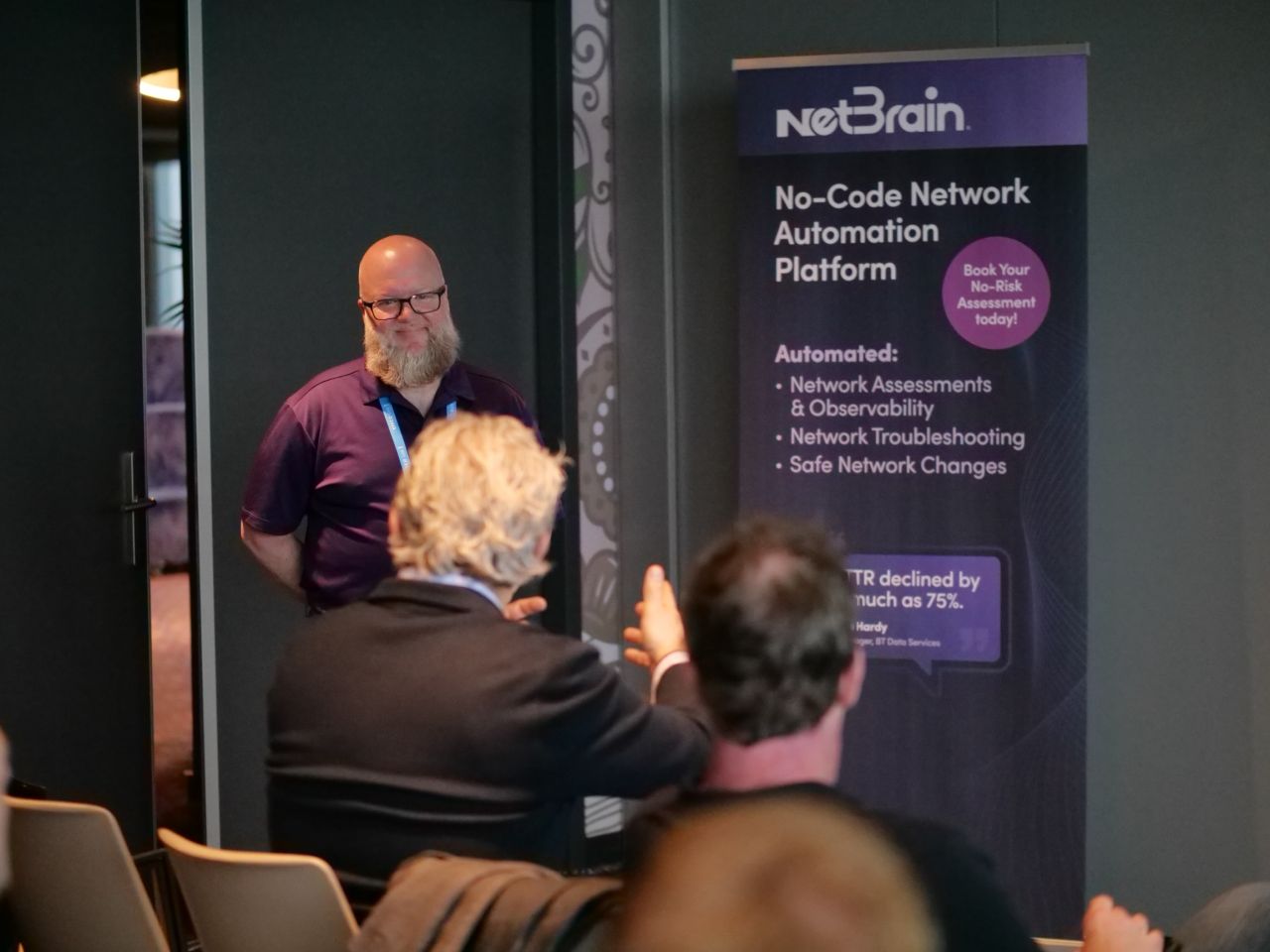
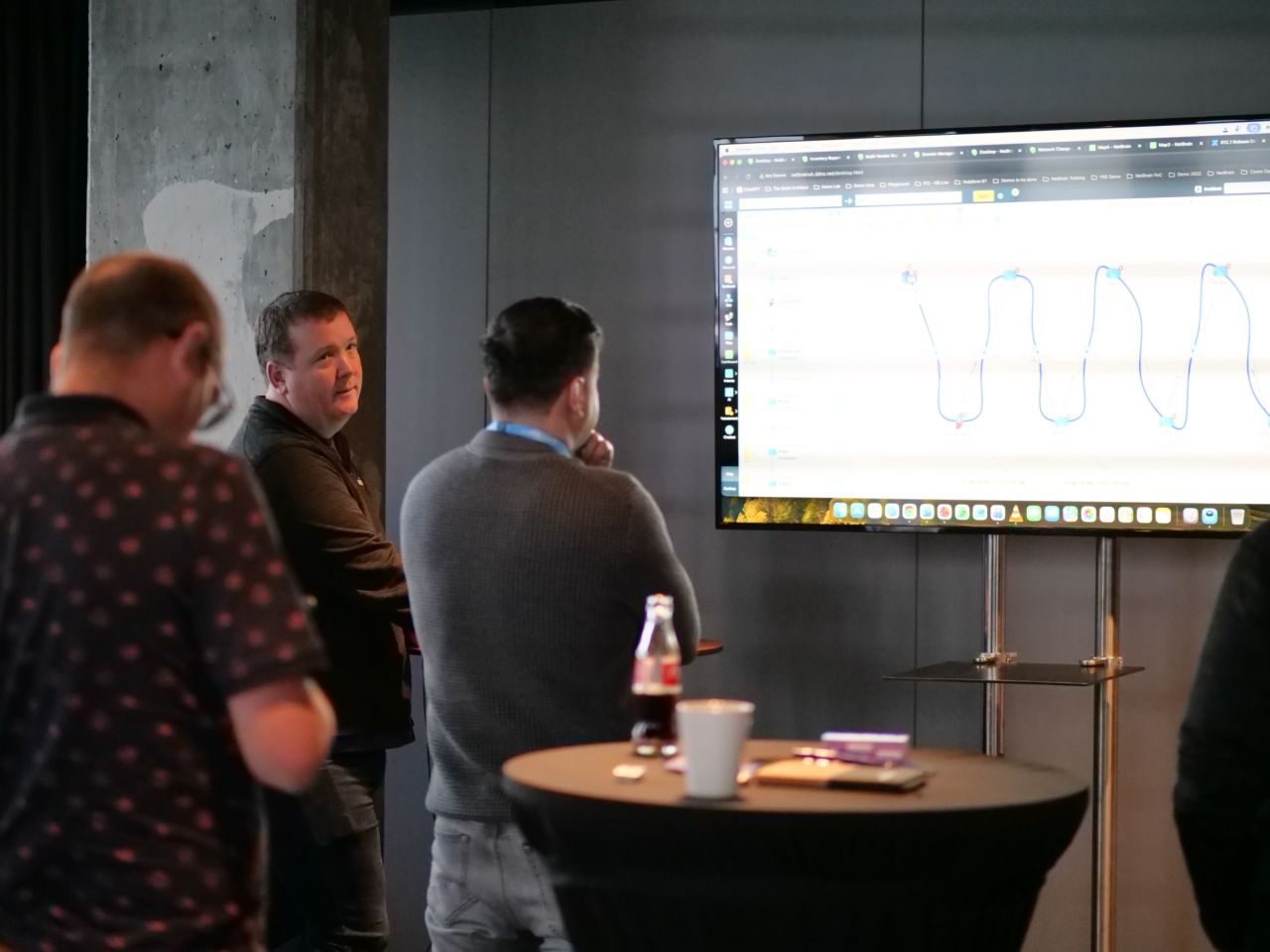
I just got back from a week in Amsterdam. NetBrain was running the Zero Outage Lounge nearby, a dedicated space for focused conversations with customers, prospects, and partners away from the noise of the main show floor. Those conversations were some of the most honest I’ve had in a while. Real teams, real operational challenges, no vendor theater.
But I also had a pass to walk Cisco Live EMEA. And I did. Several times.
What I saw confirmed something I wrote about back in December. Something does feel different about network operations right now. Amsterdam just showed me exactly where that feeling is coming from.
Every major vendor at Cisco Live EMEA had a version of the same narrative. AI assisted operations. Intelligent automation. Autonomous networks. Agentic this, observability that.
The messaging was polished. The booth graphics were impressive. The language was everywhere.
And then I walked into the developer and DevOps area.
It was packed. Standing room in sessions. Engineers crowded around screens watching demonstrations of how to pull data out of one tool and push it into another. How to build Ansible playbooks. How to write regex to parse CLI output. How to stitch different automation components together into something useful.
These were not beginner engineers. These were practitioners trying to figure out how to make automation actually work in their environments.
That contrast stopped me cold.
On one side of the building, vendors were talking about autonomous operations and AI driven networks. On the other side, engineers were learning the fundamentals of getting two tools to talk to each other.
Both things were true at the same time. And that gap is the most honest picture of where the industry actually is right now.
What Customers Were Actually Telling Us
The conversations at the Zero Outage Lounge reinforced the same picture from a different angle.
Teams are not short on ambition. They want to automate more. They want AI to help them move faster. They understand where the industry is heading and they want to get there.
What they are short on is a clear path from where they are today to where they want to be. The tools exist. The intent exists. The operational reality of actually building reliable, scalable automation workflows in a production environment is where things get hard.
That is not a technology problem. It is a maturity and journey problem. And it is one that almost every team I spoke to was navigating in their own way, at their own pace, with their own constraints.
A Few Honest Conversations
I ran into some people I know from across the industry while I was there. Those conversations were the most useful part of the week for me personally.
A friend now at Cisco Thousand Eyes walked me through what they have been building. It was genuinely impressive. More importantly it was a conversation about how complementary visibility and operational automation can be when they work together rather than in isolation. Two platforms solving different parts of the same problem for the same customer. That kind of ecosystem thinking is where I think the real value gets unlocked for practitioners.
I also caught up with some folks from IP Fabric. Good people building real technology. The broader conversation reinforced something I already believed: the networking industry has a complicated relationship with Cisco. Vendors navigate that carefully. Practitioners feel it differently.
The Agentic Language Is Real: But Early
One thing I paid close attention to all week was how vendors were using agentic language.
It was showing up everywhere. Agentic operations. Autonomous workflows. AI agents for network management. The terminology was clearly gaining momentum across the industry.
But the definitions were inconsistent. Some vendors used agentic to describe AI that surfaces recommendations. Some used it to describe automated workflows that still require human approval at every step. A few were starting to talk about systems that can reason, act, and learn from outcomes.
The language is ahead of the implementations in most cases. That is not a criticism — it is just where early markets are. The important thing is that the conversation is shifting in the right direction.
What I kept thinking about while walking that floor was the gap between where the terminology is and where practitioners actually are. The engineers in the DevOps sessions were not thinking about agentic operations. They were thinking about how to get their automation to run reliably across more than three device types.
Both conversations need to happen. The industry needs a vision of where this is going. And practitioners need a realistic map of how to get from where they are today to that destination.
What Amsterdam Confirmed for Me
I came back from that week with a clearer sense of what I want to write about this year.
The automation journey in network operations is not linear and it is not simple. Teams are at very different stages. The gap between vendor narrative and practitioner reality is still significant. And the engineers doing the real work are hungry for something more practical than a keynote slide.
In December I said I had been thinking about the stages teams go through on this journey — the moments where progress stalls and what it takes to move forward. Amsterdam made me more confident that framing is the right one.
I am going to share that thinking soon. It is time to put it on paper.
Pingback: Cisco Live 2026: Agentic NetOps and the Tokenomics Problem