You might have seen my post about this already. My AI knows what’s in my refrigerator, the pantry, and the freezer too. That’s not a joke and it’s not a smart fridge. It’s a Claude project I built out of pure annoyance, and six weeks later it’s still running my kitchen. Here’s the whole story, warts and all.
Where it started
I follow a German TikTok cook named Joeskochwelt (Josef E). Great recipes, all in grams and milliliters. I kept screenshotting them and doing the metric math by hand every single time. That’s it. That’s the whole spark. I wanted something that would convert a recipe once and remember it.
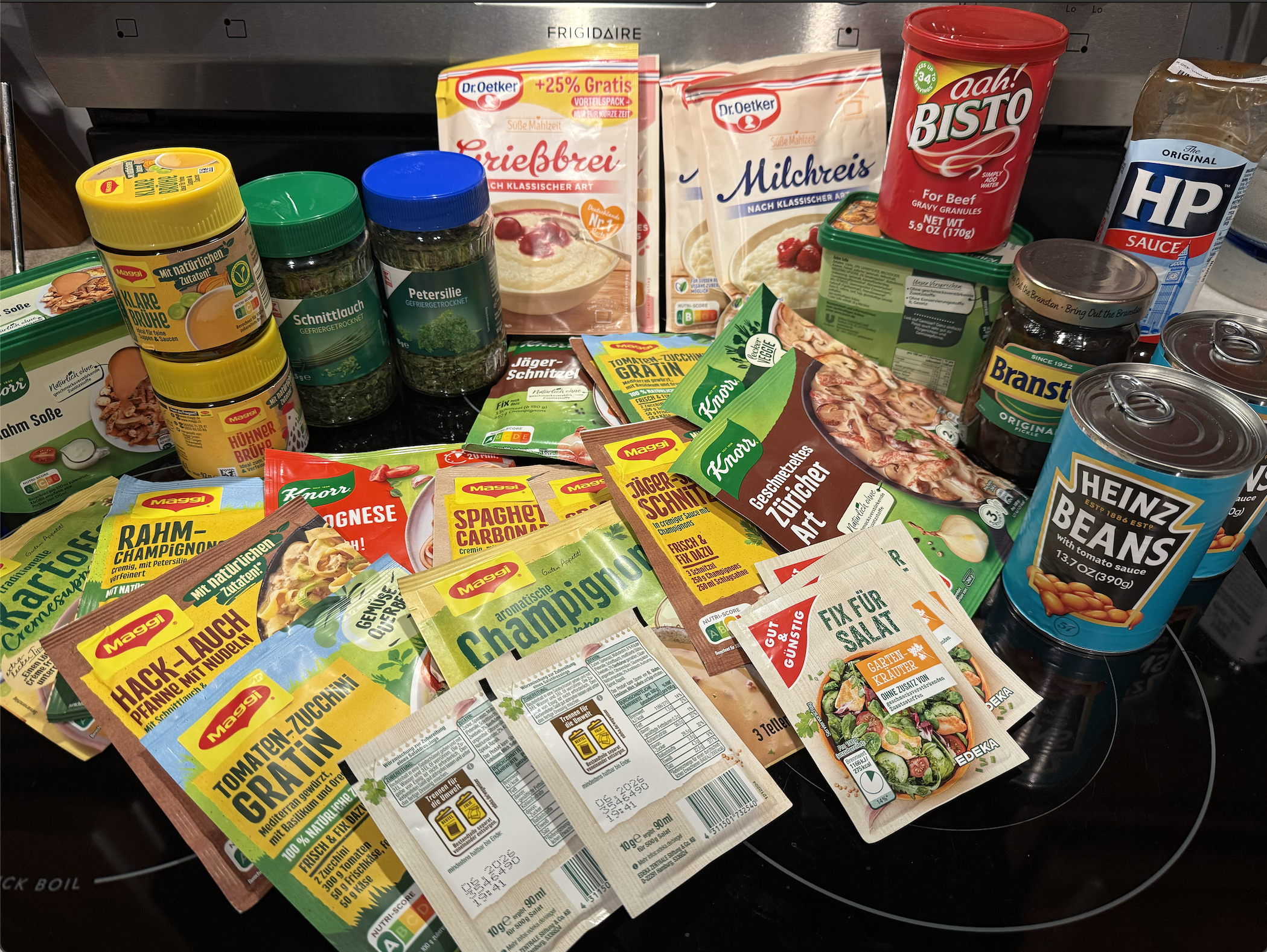
Then it grew, because I have a problem most people with a German side of the family probably share. I’ve got a deep pantry stacked with stock brought back from Germany trips: roughly thirty Maggi fix packets, two big containers of Knorr Rahm, a dozen or more EDEKA dressing packets. I could never remember what I actually had. I’d buy something I already owned, or find out mid cook that I’d used the last of something I needed.
How I actually built it
I didn’t type any of this in. I stood in my kitchen with my phone, opened the Claude app, and read my shelves out loud. My fridge, freezer, pantry, shelf by shelf, exactly as they’re organized in real life, which is why the file still reads like someone talking through a kitchen instead of a tidy spreadsheet. Nobody’s typing out thirty Maggi packets by hand on a phone. Voice is what made it possible.
From there it turned into a real system: a recipe collection, a running inventory, a shopping list, a set of rules for how deductions work, and a file for my equipment, stove, grill, Instant Pot, the works.
What it actually does, cook to cook
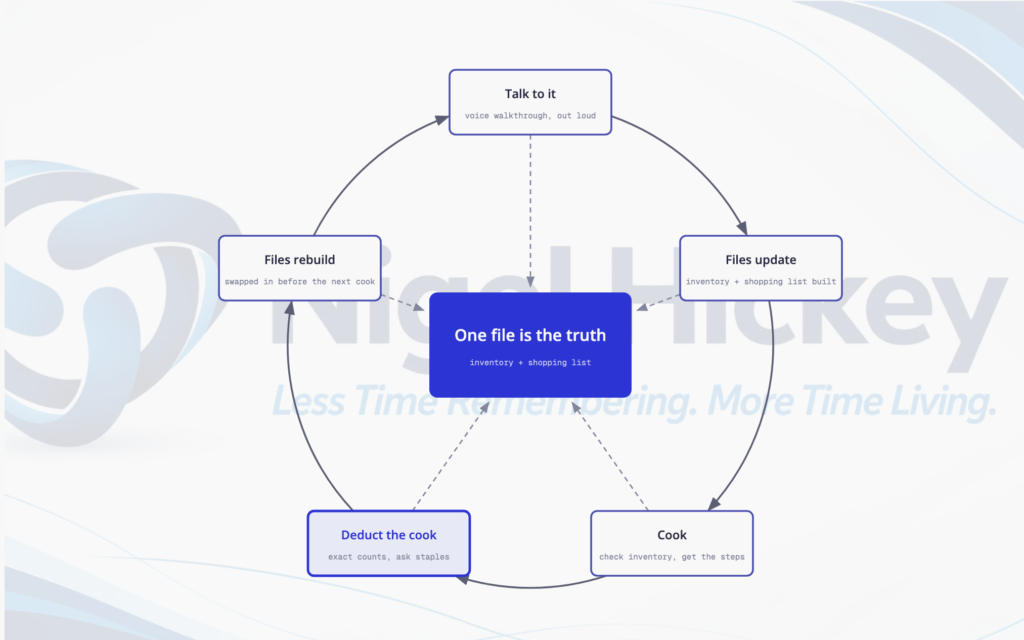
Before I cook, it checks the inventory and tells me what I have and what’s missing. It gives me a prep list, then a numbered cook sequence I can actually follow one handed on my phone at the stove. After I eat, I say one line: deduct this cook from my inventory. It splits what I used into things it can count exactly and staples it won’t pretend to measure to the teaspoon, asks me anything it’s not sure about, and hands me back a rebuilt inventory and shopping list. I download both and swap them in by hand before the next cook.
That last part matters. It can’t write to its own files. Every update is something I have to manually replace. On a phone, in a kitchen, that’s real friction, and I’ll get to what that friction actually costs in a minute.
The part that made it worth building
The first time it really proved itself was a Sunday cook, teriyaki chicken and Hawaiian mac salad. After I told it to deduct the cook, it asked me a couple of direct questions: was that my last box of elbow macaroni, did I still have carrots. I didn’t. Both landed on my shopping list with the reason attached, and I never would have remembered either one standing in a grocery aisle a week later.
It also finally solved a burger problem I’d been carrying around for twenty years. I kept making burgers that tasted like meatloaf and never knew why. Turns out it’s breadcrumbs, egg, and overmixing, the same three things that make meatloaf meatloaf. The fix was skipping all three, seasoning the outside only, and letting 80/20 beef do the rest. I actually argued with it the first time it told me to keep the egg, and the second answer was the right one. Worth saying honestly: it didn’t get it right on the first try. I had to push back.
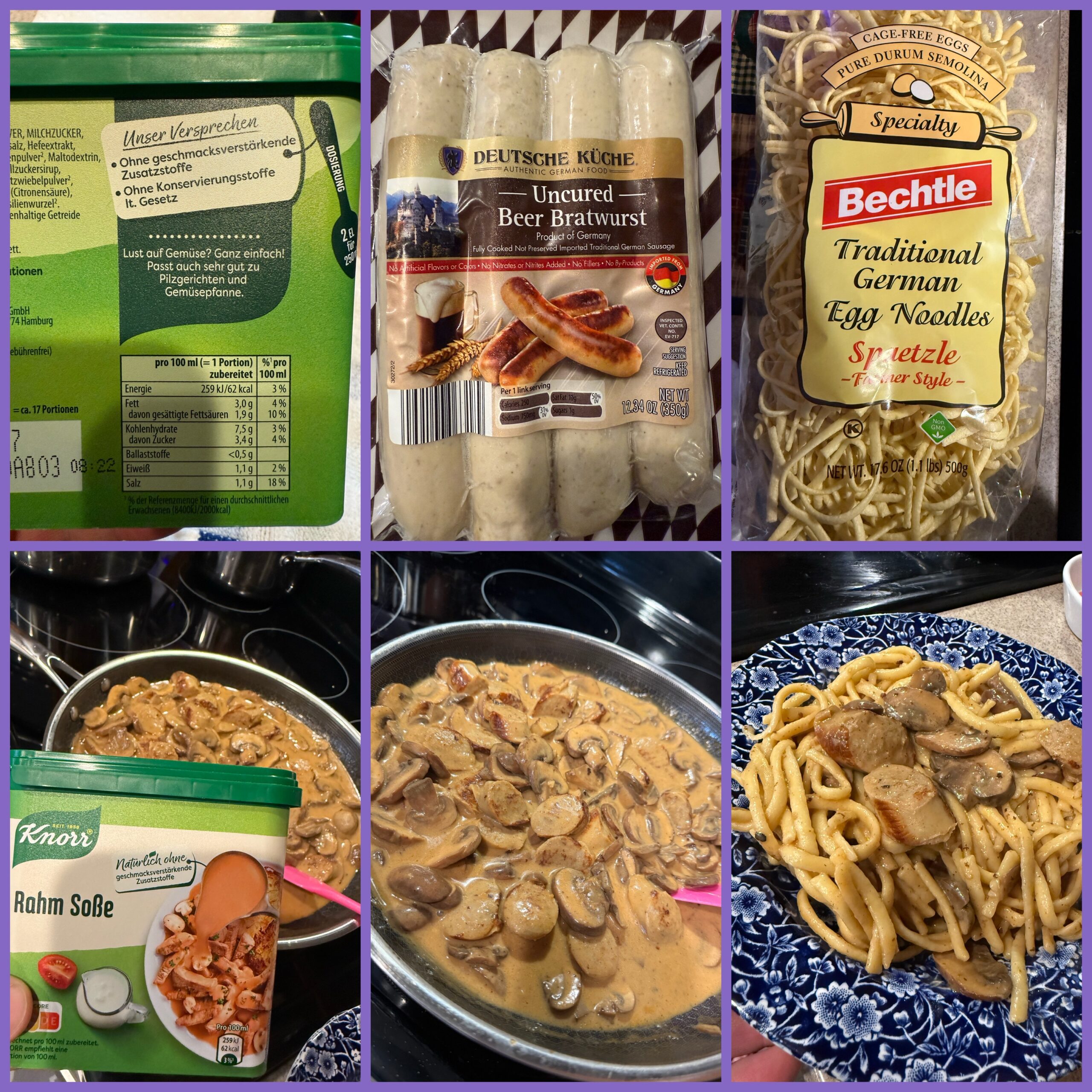
Not everything in the recipe file started as an actual recipe. One night I had beer bratwurst, mushrooms, a container of Knorr Rahm sauce base, and a bag of spaetzle, no plan and nothing written down. I told it what I had and asked it to build something out of it instead of following something. It walked me through browning the brats for crust only since they’re already fully cooked, browning the mushrooms undisturbed so they don’t just steam, whisking the Rahm powder into cold water before the heat, and adding the cream last, off low heat. It even told me to taste before reaching for salt, since the packet and the drippings already carry plenty. None of that came off a box. It came from asking, and now it’s a permanent recipe in the file instead of something I’d have to remember how I pulled off the one time.
The stuff that makes it more than a recipe box
It’s not just recipes and inventory. My son sent me a Costco variety pack of Spam from Hawaii, nine cans, three flavors, plus a slicer that looks like a giant egg slicer. Instead of just logging it, it worked out what to actually do with each flavor against what was already in my pantry: teriyaki for musubi over rice I already had, jalapeño into a breakfast hash. That’s the difference between a list and something that actually knows your kitchen.
It talked me through refreezing chicken breasts I’d thawed on the counter (short answer: don’t, marinate them in the fridge and use them, here’s your window). It’s translated German packet instructions off a photo mid cook, told me when not to double up a spice that was already in the mix, and adjusted the water and simmer time for a bigger batch than the packet was written for. And because a chunk of my pantry is British and Scottish stock, not just German, it’s just as useful converting the measurements on those labels to something a US kitchen understands.
My favorite one isn’t even a food skill. I dried out a batch of chicken thighs on a new grill because I got distracted swatting a wasp. I explained what happened expecting to feel dumb about it, and it didn’t blame my technique. It called it exactly what it was: a wasp and timing problem, not a cooking problem. Small thing, but it’s also the moment I realized this project keeps me honest about what actually happened during a cook, not just what I meant to do.
Now the honest part
This is the part I almost left out of the first post, and I shouldn’t have, because it’s the part that actually matters if you’re thinking about building something like this yourself.
The files can go stale, and it’s cost me. On one cook, the version of my recipe collection it could see had four recipes. My real collection had ten. It was about to build on top of the wrong version, and if I hadn’t caught it, six real recipes would have quietly disappeared. It happened again on a different cook, missing five recipes that time. That’s not a one time glitch. That’s the actual failure mode of this system, and if you build your own version, plan for it from day one instead of finding out the hard way like I did.
The cause is simple and a little embarrassing: every update lives in a file I have to manually download and swap back in. If I forget, or cook in two separate conversations without swapping the file between them, they both work off the same outdated starting point and one overwrites the other. It’s not smart about this. It just does what I tell it to do with whatever file happens to be sitting there.
It also won’t tell me exactly how much paprika I have left, on purpose. Staples like that get a plain question instead of a fake precise number: did this run low, yes or no. That’s a deliberate choice, not a limitation I’m complaining about. It’s meant to be a fair estimate of my kitchen, not a perfect inventory system, and pretending otherwise would make it less trustworthy, not more.
If you want to build your own version
I’m not saying it’ll work exactly the same for you. I’m just saying here’s how I did it, and you should be able to do something similar with whatever you’ve already got. I built mine in Claude because that’s the tool I already use. You could do the same thing in ChatGPT, Gemini, or whatever’s already open on your phone. Honestly, the AI matters a lot less than the habit does.
You talk to it (I voice-to-text daily so this is second nature to me) standing in the room with whatever you’re trying to track. You keep one file as the real source of truth. You tell it the truth about what changed, including the times you forget to. With some clunky, manual parts along the way. Mine still has them occasionally.
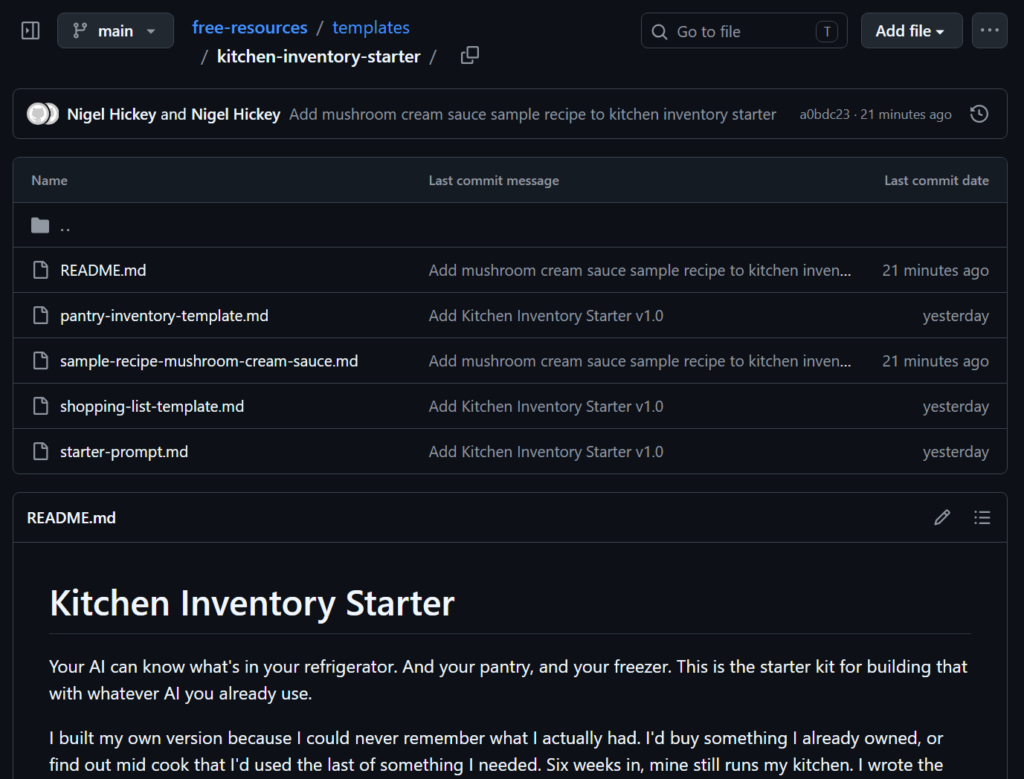
I’m putting together a simple starter template on GitHub for free, that walks through the same basic setup: a pantry file, a shopping list, and the rules I had to learn the hard way so you don’t have to relearn them from scratch.
The starter kit is here, along with a free recipe from my own collection: Kitchen Inventory Starter.